.

.
marylin monroe
Showing posts with label New Zealand. Show all posts

The 'Millennials’ - insights Into What’s Shaping their Buying Habits

Photo credit: Shannon Stapleton/Reuters

Jewelry News Network guest columnist, Chris Benham, is co-founder and director of Inspired Jewellery Ltd., Wellington, New Zealand, a global creative studio for specialist jewelry design.

Creating a luxury brand amidst the information overload on the internet is increasingly becoming a challenge. As jewelry companies look to position themselves for the next generation of purchasers, I took the opportunity to ask Hunter and Angelka, both in their early 20’s (the “Millennial Generation”) to share their views on what’s shaping their buying habits and how they are filtering through the holiday sale season madness.

In part one of this two part article we hear from Hunter, followed in part two by Angelka. They provide some valuable views on what’s important to them and insights into what investment jewelry companies need to make to win their trust and future business.

Hunter:
There will always be those who are motivated primarily by price, but I think that quality is becoming a more decisive factor in the purchase decisions of the middle class with budget concerns but still with income disposable for consumer goods purchases.
My purchases have definitely shifted in recent years to quality, longevity, exclusivity, innovation and/or tradition, and un-branded, timeless style. Plain leather shoes, vinyl records, and Ikea furniture being a few examples. The brands that appeal to me are ones that think outside the box and sell me on their product instead of their logo. My watch designed for the sight-impaired, and my urbanears headphones are the kinds of products I most treasure. Based on where I see a lot of these such products coming out of, I think that Northern Europe learnt this idea a while ago.
Our generation has seen quality triumph over price or quantity already in digital media: music and movies are now so easy to purchase online (and of such reliable quality) that the majority of consumers are choosing to do that instead of downloading free pirated copies. I think it's natural to be distrustful of something that's irrationally low priced. There's a reason why a company would charge more for their product, and if it's not because they have an expensive label (see Gucci, Louis Vuitton, etc.), then presumably it's because it costs more to make and is of higher quality.
It's more than just your pricing - your whole company has to reflect that image of forward-thinking design and age-proven quality. It's manifested in everything from the materials of the product (wood, glass, metal, and natural fibers seem to be preferred over plastic and its derivatives) to the fonts you use on the website.
I value companies that have a forward-thinking outlook, but root it in a timeless, tangible product. In particular companies that build a story around the people behind the products. When I bought my watch (designed for the sight-impaired), I could view on the company's website not only the entire company from designers to marketers, but also some of the blind people they brought on as beta testers. That human element really set them apart to me. I would continue to stress it when individuals design and build jewelry. 
Charitable donations and purchases are increasingly indistinct to my generation, and so when we have the chance to directly support people with our purchases, we respond to that. Kickstarter, the crowdfunding site where you pledge money that becomes the company's investment capital in return for perks or the first products off the line, does a great job of leveraging that. Another example is a website called Subbable - I donate a small monthly amount to online video producers that I like to support their (ad-free) content, and in return I can "bank" those dollars towards perks (like merchandise). I wouldn't do this if I didn't feel some connection to the producers. 
I definitely believe that buying decisions in my generation are shifting from purely price-driven to something based in quality that reflects one's personality and tells a unique story.
Please join me on the Jewelry News Network Facebook Page, on Twitter @JewelryNewsNet and on the Forbes website.

Travel and Architecture's Influence on Jewelry Design

Disosceles ring inspired by the CCTV building in Beijing.
Jewelry News Network guest columnist, Chris Benham, is co-founder and director of Inspired Jewellery Ltd., Wellington, New Zealand, a global creative studio for specialist jewelry design.  

Each piece of jewelry designed by Ian Douglas, design director of Inspired Jewellery, has a story behind it. Inspirations that only a creative mind could weave into works of art in such abstract ways. Something we can all relate to is the endless inspiration that travel provides. Some people keep a diary to recount their travels, some take thousands of photos. Ian designs jewelry that acts as a visual journal of his travels, taking inspiration from what he has seen and turning this into beautifully crafted pieces.

A recurring theme seen in Ian’s jewelry is architecture from around the globe. Not surprising, as Ian’s original ambition was to become an architect. It is clear that the passion's still there as it influences many of his designs. Each ring design is like a mini building. Like buildings, they are complex structures that must hold together and form a function while still looking beautiful and aesthetically balanced on the hand. As architecture takes many forms in different cultures and contexts, each piece of jewelry is unique and serves as a real reminder of the places Ian has traveled.

In Beijing, a true marvel of architecture is the new CCTV building designed by Dutch and German architects Rem Koolhaas and Ole Scheeren of OMA. As Ian travelled to Beijing a number of times while working on a contract with Hiersun’s I Do stores in China, the striking design of the building continued to resonate with him; the offset form, cantilevered structure and overhanging center begged to be transformed into a ring. The resulting Disosceles ring (top photo) plays with rigid form and lines, yet blends perfectly around the finger; an architecturally-inspired wonder and a lasting memory of Beijing.

The CCTV building

In New York, inspiration is on every corner - you only need to look up. The Empire ring is one of the mementos of Ian’s time in Manhattan. The ring bears a style and energy that can only be described as quintessentially New York. “It’s a city that has a rawness and a refinement, incredible architecture and people, all interacting to create a feeling you can only connect to if you visit and, better still, live there. Inspired by the Empire State Building, the Empire ring is designed to distil those feelings,” says Ian.


A trip to Paris inspired the Pompidou ring. The Museum of Modern Art, with the services of the building placed on the exterior, is an exciting and visually challenging building. The wonderful contrast of line, color and movement is reflected in the Pompidou ring’s abstract patterns of contrasting gold and platinum, set off with a beautiful pear shape diamond, which serves as a collision of form and a design that exudes modern Paris chic.


A little closer to our home in New Zealand, inspiration taken from the scenery and landscapes of Australia that trace the origin of the diamonds in the Sol Ring are combined with the imagery of the sun dancing on the sweeping curves of the Sydney Opera House. Modern, urban architecture and rough outback terrain may seem like an unlikely combination, but one that epitomizes the beauty of Australia. The ring was created as part of the Terra Sol Collection designed for De Beers DTC Sightholder Diambel NV. 


The Leela ring is simply named after the hotel that Ian stayed at while in Bangalore. The architectural forms and exquisite detail in the hotel facade were enough to inspire this intricate ring.


Ian’s hometown of Wellington provides more architectural inspiration for his ring designs. The architecture of the Te Papa National Museum showcases a building that is a contrast of color and form. Using subtle color tones of palladium against white gold, Pacifica patterns of yellow gold and a blue topaz portraying the surrounding ocean, the Te Papa ring symbolizes the city. 


Ian’s travels and his appreciation of architecture are celebrated through his jewelry designs. As a designer, inspiration is gained from all facets of life; it is clear that travel and architecture is an endless inspiration source in the design of jewelry. For Ian, his visual travel journal continues to expand as he transforms wondrous sites into beautifully crafted pieces of jewelry, bringing a piece of the world home with him each time.

Please join me on the Jewelry News Network Facebook Page, on Twitter @JewelryNewsNet and on the Forbes website.

The internet's Impact on the ‘Makers’ and ‘Takers’ in the Global Jewelry Industry


Laura Stanley of Stanley Jewelers Gemologist, Little Rock, Ark., hosted Master Diamond Cutter Mike Botha of Embee Diamonds to teach consumers about the diamond cutting process. The event was televised on a local news station.
This is the first in a series of articles by Chris Benham, co-founder and director of Inspired Jewellery Ltd., Wellington, New Zealand, a global creative studio for specialist jewelry design.  

The internet has had a hugely disruptive effect on the jewelry industry in recent years, as it has with most industries. Our rapidly shrinking world has led to an increase in transparency, access and an explosion of product choice. The side effect of this is that many traditional jewelry businesses throughout the value chain have seen their margins erode.

A lot of traditional "taker" businesses that, in the past, have had to accept the prices of their suppliers, and who have historically been able to set their own prices with little challenge from their end customers, now cannot. These taker businesses range from local diamond wholesalers to Mom-and-Pop jewelry retailers that have been around for generations. Customers can quickly jump on the internet to compare prices, so these businesses have had to find ways to survive by adding value to their end customers. 

The companies that have thrived in recent years are the "makers" - the ones that have taken tradition and redefined it. There are many great examples of companies that have built brands that focus on design, craftsmanship, great personal service and trust. The byproduct of doing the tangibles well are the intangibles that form the basis of their innovation and ultimately the intellectual property that other companies struggle to understand or replicate.

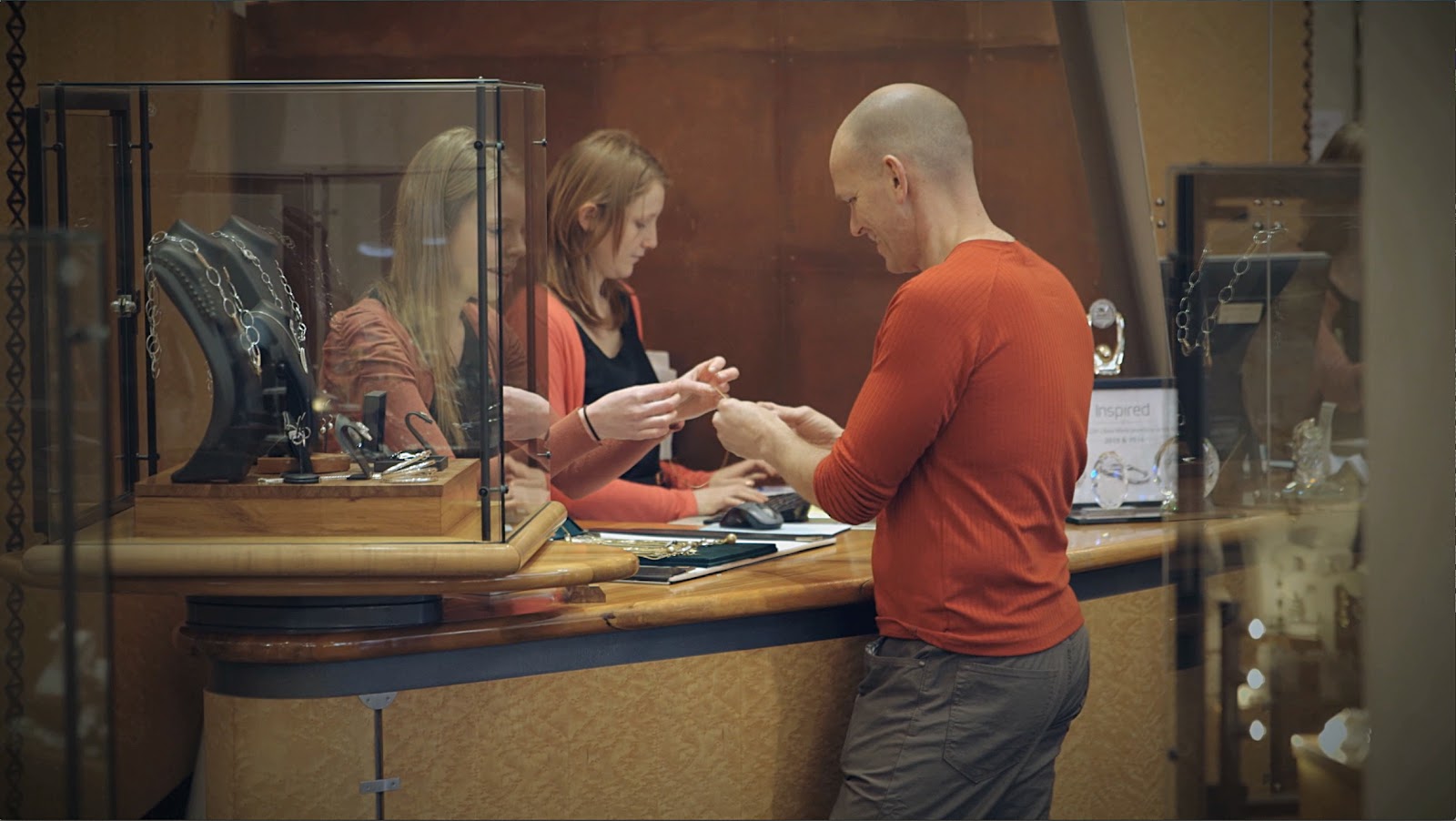
Customer picking up his purchase at The Village Goldsmith, Wellington NZ. 

The internet breeds monopolies and no more so than in the jewelry industry. The top tier diamond companies are becoming more and more dominant by the day, helped by natural economies of scale and their purchasing power. Much of the reason for this is that ‘Mom and Pop’ retailers from the US to New Zealand have the same access to diamond inventory lists as do the major online global jewelry retailers. Consumers are able to access diamond pricing information and descriptions instantaneously, make comparisons and choices at the touch of a button, and this has led to the erosion of traditional margins for retailers. Diamond companies’ margins are also getting tighter as they fight to remain competitive, ensuring that they need to innovate to stay relevant.

Why is this good for the end customer? Well, it forces companies throughout the whole value chain in the jewelry industry to genuinely look at clever ways to create better products and experiences for their customers.


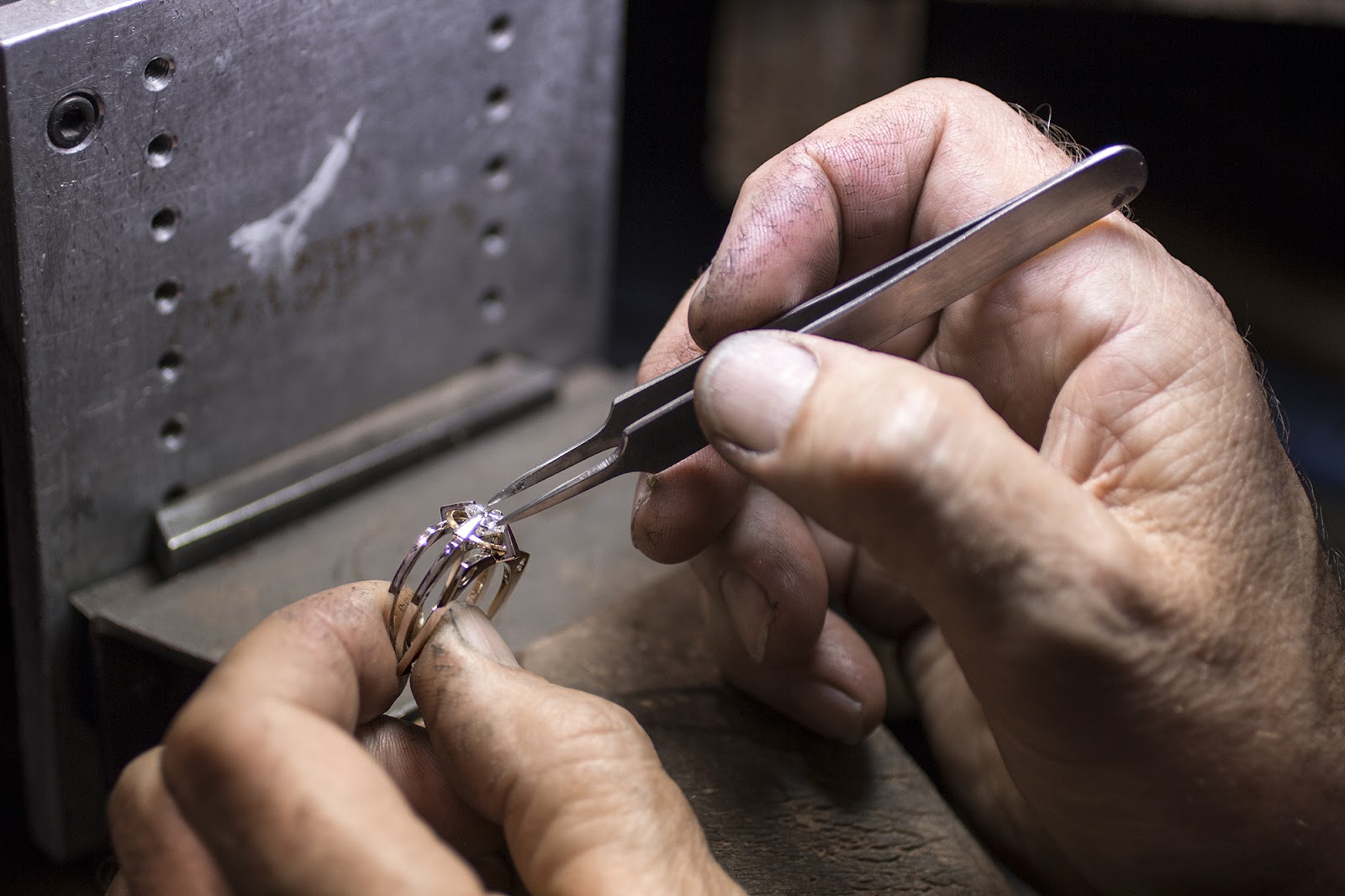
A master jeweler at Inspired Jewellery sets a diamond on a ring. 

Retailers big and small that continue to focus their efforts around the needs of their customers are seeing strong growth. In a recent report big retailers like Nordstrom attribute customer service as central to their strategy and recent growth. They are using different store types and brands to appeal to different customer profiles and age groups. They’ve recognized the need to connect with the younger generation as they will be tomorrow’s customer and are using an omni-channel strategy to support this. Burberry is another luxury brand that is going to great lengths to connect the retail store experience with the online experience.

Recent research conducted by Bain and Co. stated that when consumers were selecting which jewelry store to buy from in Western markets they valued quality service over all other factors. 

A local US retailer that has recognized this is Stanley Jewelers Gemologist in Little Rock Arkansas. Vice President Laura Stanley recently hosted Master Diamond Cutter Mike Botha of Embee Diamonds (see top photo). The aim of the “Southern Stars: Meet the Cutter” tour was to teach consumers about the diamond cutting process so that they are able to make more informed decisions. Laura Stanley said that the theme of the event was to get to know your jeweler better. The event provided Stanley’s customers with an authentic experience of what goes into cutting a diamond - a craft that is not often showcased to consumers. 

If “price makers” want to retain that position they must continually innovate and provide more intangibles for their customers to prove that the price they set is worth paying.

Please join me on the Jewelry News Network Facebook Page, on Twitter @JewelryNewsNet and on the Forbes website.

Wearables: What Happens When Tech Companies Design Wearable Products


By Chris Benham, co-founder and director of Inspired Jewellery Ltd.

Wearables is a big discussion point at the moment with the International Consumer Electronics Show (CES) in Las Vegas—where the who’s who of the tech industry launched their latest products and innovations. Many people, including myself, watched with interest to see all the latest product launches. I must admit I was pretty deflated when I saw an article on all the designs of the watches. Almost as deflated as I was when the Apple Watch was launched. 

Don’t get me wrong. I’m a gadget lover. I already have visions of incorporating my wearable in my daily life. I hop into my car. It starts up with my proximity key watch with the door already opened this way. Buy my coffee by swiping my phone using NFC technology (I can’t wait to be able to ditch my wallet and keys!) Then get home and open my garage door with the watch. Then walk to my front door and open my Kevo lock with the touch of my finger. Then as I walk in the Philip Hue lights come on along with the Sonos music streaming my favorite stations … you get the idea. But no matter how cool all this is, I won’t wear it if I look like a walking computer. 

To win me over you’ve got to combine exquisite design with exceptional ease of use. An epic challenge. No doubt Apple, Samsung/Android and Withings have all nailed the software side of this. Currently I see the wearables that have been launched fall into two categories: 

The first is the phone/tablet/laptop on your wrist category. These are the ones that feel like they’ve been designed by the creators of the software who are often not inherently wearable product designers such as watch, jewelry and fashion designers. The ones that fall into this category include the major brands like the Apple Watch, Samsung and Fitbit. It feels strange adding Apple and Samsung into this category as they are arguably the best product designers in the world. 

The second category are the traditional watches that have had some “smarts” added to them but still essentially look like a regular watch to the layperson. These include examples like Withings Activate, the latest LG and Guess watches.

When designing jewelry our challenge is always to make the diamond integral to the design and not an afterthought. The most successful diamond ring designs are the ones that achieve this. Consumers inherently can feel this when they see a design that passes or fails this emotional test. I currently believe there is a gaping hole in the wearable watch between the two categories. The technological advances are not integral to the design and consumer need. They feel like someone has plunked a phone on your wrist or a diamond on a band because you’ve got to get the diamond on there somehow.

Watches, like jewelry, provide people with an outward expression of themselves, their personality and lifestyle. They buy a watch because they have an emotional connection to the design. They already have a clock on their phone so they don’t need one like they used to. But they still buy them because of this connection and expression. 

Currently one of the biggest barriers I believe in creating a successful wearable is that in order for it to be successful you need exceptional software to back it up. This can cost millions if not tens of millions to develop. No doubt when Apple’s Watch is available it will have an exceptional user experience that integrates with all the other gadgets you use in your daily life. The same with Withings Activite, which I’m sure has great health-based software that they’ve leveraged from all their existing health based products. 

The best products will be developed, I believe, when the barriers to entry are removed and watch creators can use a platform where they can quickly create apps that integrate with the wearable they’ve created to serve a niche. The Android Wear platform will likely be the best place for this. Thus ensuring they don’t have to spend all their time being distracted by creating the software. This will have its own challenges in terms of seamless experience and lack of full control of the customer experience. Apple has overcome this by keeping the ecosystem super tight. The problem that I see with this approach is that they can get away with it when it’s a phone, a MacBook Air, etc. The catch, I don’t wear any of those things. 

So to put my money where my mouth is, my prediction is that the truly cool smart watches will come when people start focusing on niches. I like surfing and I for one can’t wait until there is a surfing watch that combines all the tide information predictions, weather patterns and proactively tells me there is a pumping swell coming over the horizon arriving at 7:15 a.m. A watch that I can wear in the surf and not have to take off when I get into the office because it looks like I’ve still got the beach on my hand. But that’s just me. 

I’ll be excited when someone creates a wearable that combines form and function not a slapping together of existing technologies. If they achieve this then I’ll be the first person to line up and buy. For now my pick is the Withings Activite but maybe that’s because it embraces traditional industrial design and is not just trying to add another screen to my life. Bring on new developments and innovation—I’ll surely be watching. 

See of full list of 56 wearables from the CES conference.

It is a very subjective topic but I’d love to hear if your thoughts on whether you agree or disagree. 

Jewelry News Network columnist, Chris Benham, is co-founder and director of Inspired Jewellery Ltd., Wellington, New Zealand, a global creative studio for specialist jewelry design. 

Please join me on the Jewelry News Network Facebook Page, on Twitter @JewelryNewsNet and on the Forbes website.